
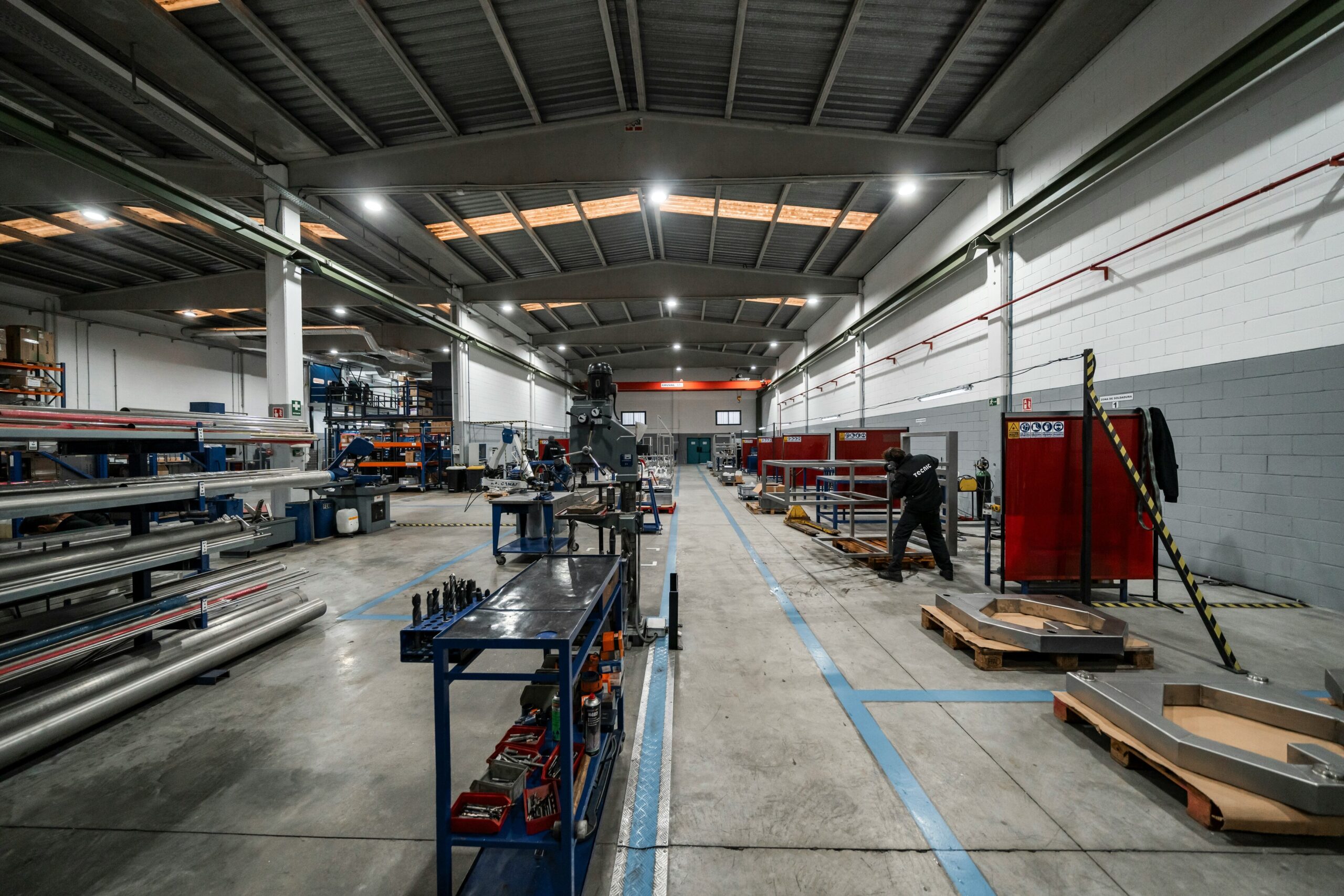

Turnkey Manufacturing: What It Means and Why More EU Buyers Are Choosing It
Anyone sourcing industrial equipment has run into the term “turnkey manufacturing” at some point. It gets thrown around loosely, though. Plenty of providers call themselves turnkey without actually operating that way.
For procurement managers and project leads across Europe, the distinction matters. Manufacturing projects keep pulling in more specialized subsystems. That makes the gap between a real turnkey partner and a vendor that just bundles services together more expensive to ignore. This article looks at what turnkey manufacturing actually means. It covers what belongs in a proper turnkey manufacturing services package, and how to spot the difference when you’re evaluating a partner.
What Is Turnkey Manufacturing?
Turnkey manufacturing means one provider takes full responsibility for a project. They own it from the initial concept through to a working result. The client gets to “turn the key” and start production. They don’t have to assemble and manage the process themselves.
Compare that to a more typical setup. A buyer hires a design firm, a fabrication shop, an installation crew, and a controls integrator separately. Then they spend the rest of the project making sure those parties actually talk to each other and hit the same deadlines. In a turnkey arrangement, the provider takes on that coordination work instead. The client states what they need. The provider handles engineering, sourcing, installation, commissioning, and handover.
That’s also the simplest way to answer a related question: what does turnkey mean in manufacturing? It means the project arrives ready to run. Equipment installed, systems commissioned, paperwork in order. Not a pile of parts the client still has to figure out how to assemble.
Why Full Turnkey Manufacturing Has Become More Attractive?
A few things are pushing European buyers toward full turnkey manufacturing right now. Fragmented accountability is probably the biggest one. Split a project across several vendors and you create gaps. A mechanical system might not quite match an electrical spec. A delay at one supplier can knock the whole schedule sideways. Often, no single contract actually covers fixing it. A turnkey contract puts that accountability in one place.
Engineering capacity is another factor. Most mid-size manufacturers don’t keep a large in-house engineering team on staff just for the occasional new production line or surface treatment upgrade. It doesn’t make sense to. A turnkey provider supplies that depth for the duration of the project instead. There’s also the simple matter of tracking one schedule and one budget, rather than reconciling several vendor timelines that rarely line up. And when a facility races against a downtime window to add capacity, fewer handoffs usually means fewer places for things to go wrong.
Key Advantages of a Turnkey Manufacturing Approach
What does this actually get you?
One point of contact, so there’s never a question of who’s responsible if something underperforms after installation. Less internal project management overhead, since your team isn’t acting as an unpaid general contractor. Faster execution in most cases, because fewer dependencies sit outside the provider’s control. Better technical coherence too. A system that one team designs and builds tends to have fewer mismatches between mechanical, electrical, and process elements than one stitched together from separate specifications. And a documentation trail that’s actually consistent, instead of something you have to reconstruct from five different vendors after the fact.
What's Included in a Typical Turnkey Product Development Package?
A proper turnkey product development package usually covers concept and feasibility work first. That means defining the requirement, the production targets, the site conditions, and anything regulatory that needs accounting for. Then comes engineering and design, sized to the actual production load rather than a generic spec sheet. Procurement and supplier coordination follow, then installation, then commissioning and validation under real or simulated production conditions. Handover should come with proper documentation: technical records, as-built drawings, operator training. The better providers also build in ongoing support. That includes a spare parts strategy worked out at the design stage, not scrambled together after the first breakdown.
Can One Company Provide Both Custom Product Design and Turnkey Manufacturing?
Yes, and this is where providers really start to differ. Some only handle the build-and-install side. They assume the client already has a finished design ready to go. Others manage the whole thing, from custom engineering through installation and commissioning. That removes one more handoff point from the project.
The question worth asking isn’t really whether a provider can do both. It’s whether they can show real engineering depth, not just the ability to install equipment someone else specified. A team that designed the system understands why they built it that way. That knowledge tends to matter most during commissioning, when small adjustments often decide whether the system hits its rated output or falls short.
How Turnkey Manufacturing Providers Handle Quality Control?
Good quality control covers the whole project, not just a final walk-through before handover. In practice, that means design reviews against the original requirement. It means inspecting incoming equipment and materials, and checking work during installation itself. It means validating performance under load during commissioning, and keeping a record of test results and as-built configurations.
European buyers in particular tend to expect this work to align with recognized frameworks like ISO 9001 for quality management. A provider operating under ISO 9001 principles has to show consistent, documented processes throughout a project. They can’t just claim they maintained quality and leave it there.
How Should Businesses Choose a Reliable Full-Service Manufacturing Partner?
A handful of questions tend to separate the genuine full-service manufacturing partners from the ones just using the label. Which stages do they actually manage themselves? Which stages get subcontracted out without any real oversight? Do they lead with engineering, or are they really just installers who happen to also coordinate procurement? How does the contract spell out accountability? Is it one agreement covering the full scope, or does responsibility quietly split across several documents the moment something goes wrong? What documentation do they hand over, and at which stages, not just at the end? And what’s their track record across different regions and regulatory environments? That’s usually where the harder coordination problems surface.
The same logic carries over to electronics turnkey manufacturing. A few extra things matter here: component traceability, compliance with relevant electrical and safety standards, and testing protocols on assembled systems. So does the provider’s plan for obsolescence risk on parts with long lead times. The core question stays identical either way. Does the provider absorb the coordination risk? Or does it land back on you the moment two pieces don’t fit together?
Benefits of Integrated Manufacturing Solutions for Startups
Startups and smaller manufacturers often gain the most from integrated manufacturing solutions. That’s because they have the least room to absorb a coordination failure. A startup moving from prototype to real production usually doesn’t have an internal engineering team built for a full facility project. One delay in a multi-vendor chain can eat through a disproportionate chunk of limited cash. A single integrated provider gives a growing manufacturer that engineering and project management capability, without the cost of building it in-house first.
What Is an Example of a Turnkey Project?
Picture a manufacturer that needs a new surface treatment line, say a powder coating or galvanization system, to support additional production volume. In a turnkey setup, the provider assesses the requirement and engineers the line layout and process parameters. They source and coordinate the equipment, manage installation on site, and commission the system under real production conditions. Then they hand over a documented, working line, all under one contract. The same approach works for a metal processing facility fit-out, an automotive supplier infrastructure project, or a retrofit of an existing line. What ties these together isn’t the type of system. It’s that one provider owns the project from definition all the way through to operation.
Choosing a Turnkey Manufacturing Partner
Done properly, turnkey manufacturing isn’t a label you slap on a brochure. It’s a specific commitment: one contract, one accountable party, a process that runs from concept to a working, validated system. Industrial buyers in Europe often face a choice. They can manage a project internally, or hand it to a single partner. It usually comes down to how much coordination risk the business wants to carry itself.
If you’re weighing a turnkey approach for an upcoming facility, line installation, or upgrade, look closely at how a prospective partner structures accountability, documentation, and quality control. Not just their delivery timeline. See how HIC approaches project delivery on our services page. Look at completed work on our projects page. Or get in touch to talk through a specific requirement.
FAQ
Is turnkey manufacturing more expensive than managing vendors separately?
Not necessarily. A turnkey contract may look different on paper than a stack of individual vendor quotes. But it usually cuts down on hidden costs. Coordination failures, schedule overruns, and rework tend to show up over the life of a multi-vendor project, not at the start.
Does turnkey manufacturing mean I lose control over the design?
No. A properly run turnkey process still keeps the client closely involved in defining requirements and reviewing designs at key stages. What changes is who’s responsible for executing and coordinating the work, not how much say the client has in what gets built.
How long does a typical turnkey manufacturing project take?
It depends heavily on scope, anywhere from a focused line installation to a full facility build. A reliable provider should give a realistic, milestone-based timeline early on, rather than a single number with no detail behind it.
What happens if something goes wrong after handover?
This comes down to how the contract is written. A genuine turnkey provider builds post-handover support and a spare parts strategy into the original scope. They don’t treat it as a separate negotiation once a problem actually shows up.
Can a turnkey provider work alongside our existing internal engineering team?
Yes, and this is common. Plenty of manufacturers bring in a turnkey partner for one specific project, like a new line or an expansion. Their own team keeps running day-to-day operations. The provider’s scope can be shaped around whatever gap actually needs filling.