
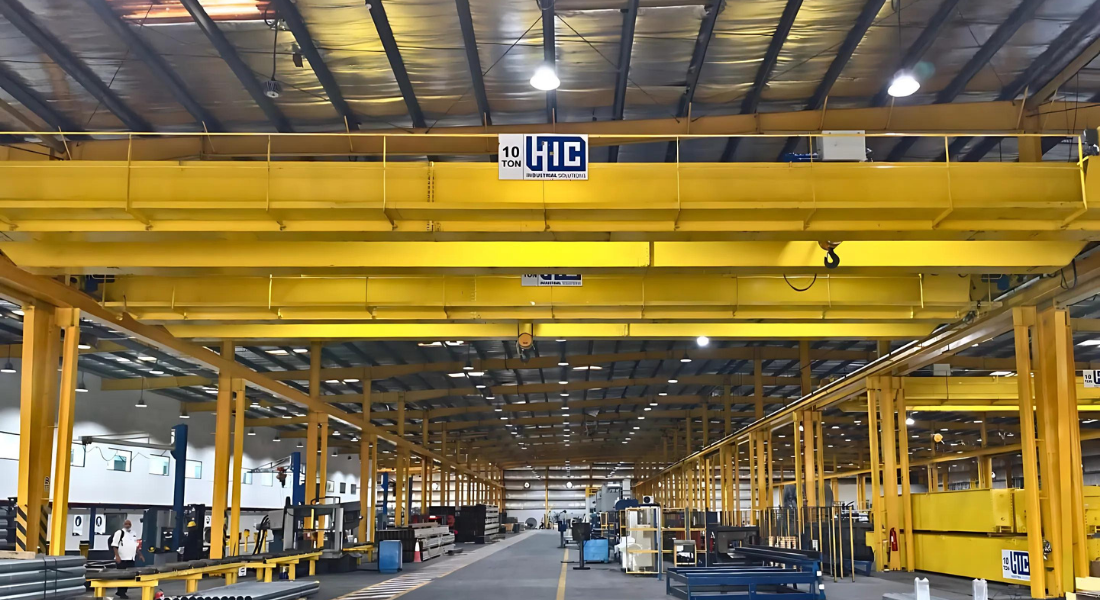

Are you struggling with which type of overhead crane you should choose?
Moving heavy supplies and materials from point A to point B can quickly become frustrating. Every manual lift costs you your most valuable resource: time. Hours slip away while your team carries goods by hand. This process wastes time, increases the risk to worker safety, and takes up valuable floor space you can’t spare. You shouldn’t have to carry that weight. Let overhead cranes do the job, and let them lift the load off your shoulders.
What Does an Overhead Crane Do?
- An overhead crane lifts and moves heavy loads across three directions: up and down, side to side, and forward and backward. This combination removes the need for manual lifting, forklifts, or floor-level transport in busy production areas.
How Do Overhead Cranes Work?
- The crane bridge runs along elevated rails on either side of the workspace. A hoist(raises and lowers the load) and trolley(moves it side to side) move along the bridge, lifting the load vertically, then carrying it horizontally( travels forward and backward along the runways) to its destination.
Operators control the system from the floor, a pendant, or a cabin, depending on load size and facility layout.
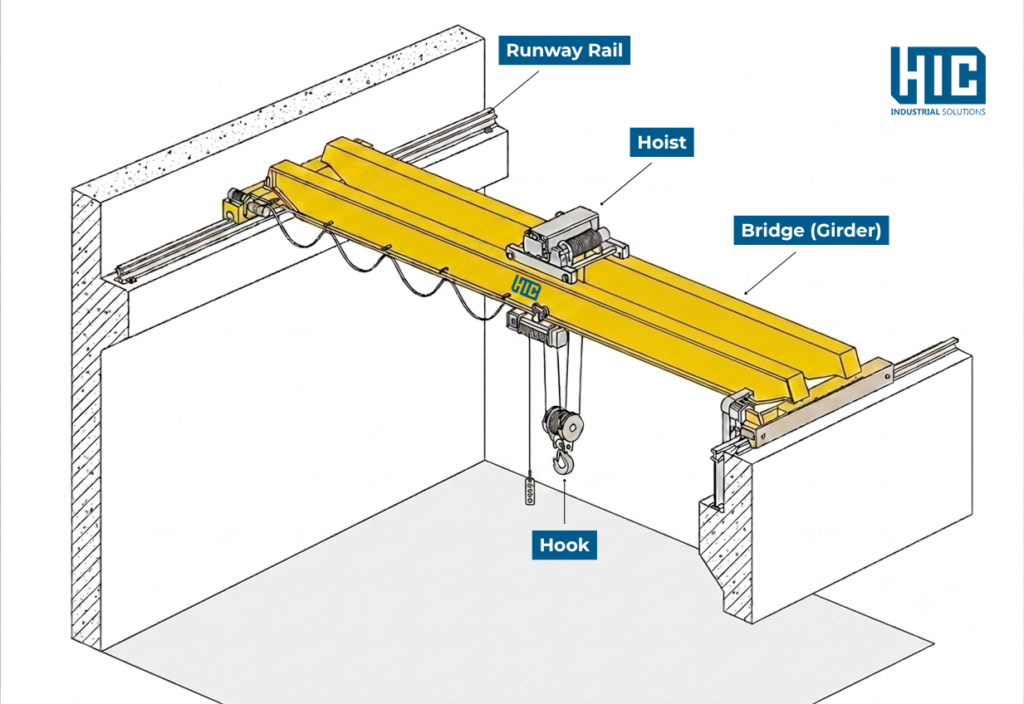
Double Girder Overhead Bridge
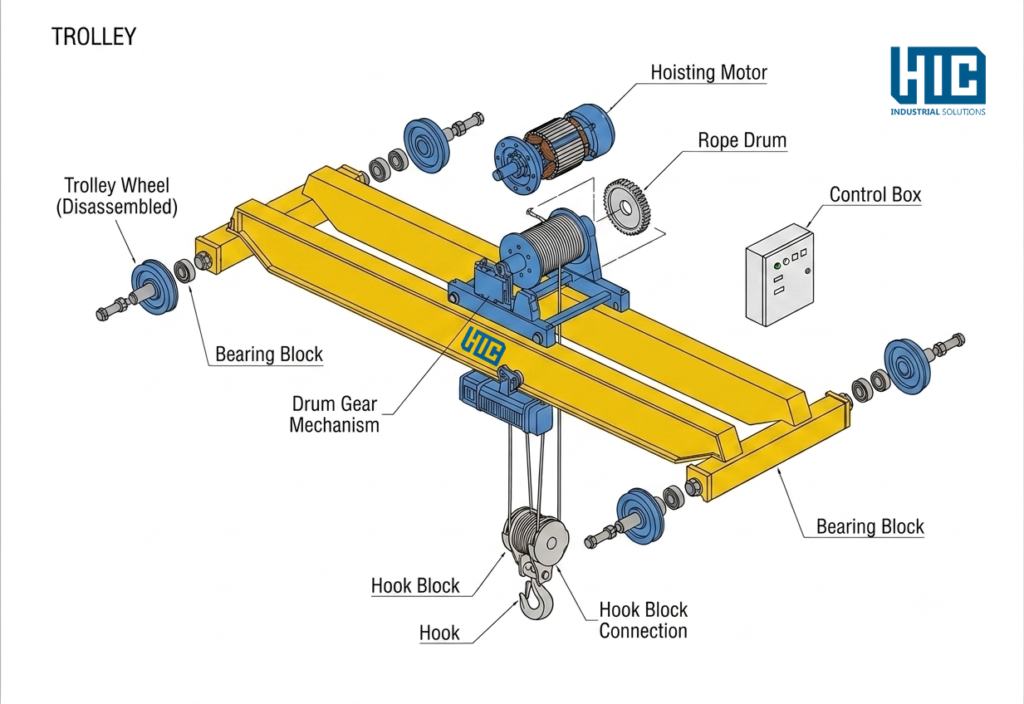
Trolley Parts
Why Overhead Cranes Deliver Real Operational Benefits?
- Overhead cranes free up floor space by lifting loads out of the pedestrian and vehicle path. They reduce manual handling injuries, cut cycle times between production stages, and support heavier, more frequent lifts than forklifts or manual labor allow.
Headroom
Investment
Capacity
Span
Maintenance Access
Single Girder
Low Headroom
Lower upfront investment
Best for light to medium loads
Suited to shorter spans
Limited walkway access
Double Girder
Requires more headroom
Higher upfront investment
Handles heavier loads efficiently
Suited to longer spans
Walkway along the bridge for easier maintenance
You might ask, what do they have in common?
Although single girder and double girder cranes differ in lifting capacity and space requirements, they share one core strength: both support your process flow more efficiently. They save time, minimize the risk of workplace accidents, free up valuable floor space, and deliver the safety and reliability your operation depends on.
FAQ
What is the main difference between a single girder and a double girder overhead crane?
A single girder crane uses one bridge beam and suits lighter loads, shorter spans, and facilities with limited headroom. A double girder crane uses two parallel beams, which allows it to handle heavier loads, cover longer spans, and provide a walkway along the bridge for easier maintenance.
Which type of overhead crane costs less?
Single girder cranes generally require a lower upfront investment. However, if your facility needs to lift loads beyond a single girder’s capacity, a double girder system often costs less over time by avoiding downtime and capacity limitations.
How do I know if I need a single girder or double girder crane?
The decision depends on four main factors: available headroom, required lifting capacity, span length, and long-term maintenance needs. Facilities with tight headroom and lighter loads typically choose single girder systems, while those with longer spans and heavier loads need double girder systems.
Do overhead cranes move in more than one direction?
Yes. Overhead cranes move in three directions: the hoist raises and lowers the load vertically, the trolley moves the load side to side along the bridge, and the bridge itself travels forward and backward along the runway. Together, these three motions give the crane access to almost any point in the workspace.
Are single girder and double girder cranes built to the same safety standards?
Yes. Both configurations follow structural and safety principles defined in industry standards such as ASME B30.2, which governs the design and operation of top-running bridge and gantry cranes.
Can a double girder crane be installed in a facility with low headroom?
Double girder cranes generally require more headroom than single girder systems because of the added structural height of the two beams. If headroom is limited, a single girder crane is usually the more practical option.
Not sure which crane fits your facility?
Share your load capacity, span, and headroom details with our engineering team, and we’ll help you choose the right system for your process — before you invest in the wrong one.